If you’ve been online in the past month, you’ve probably seen this face.
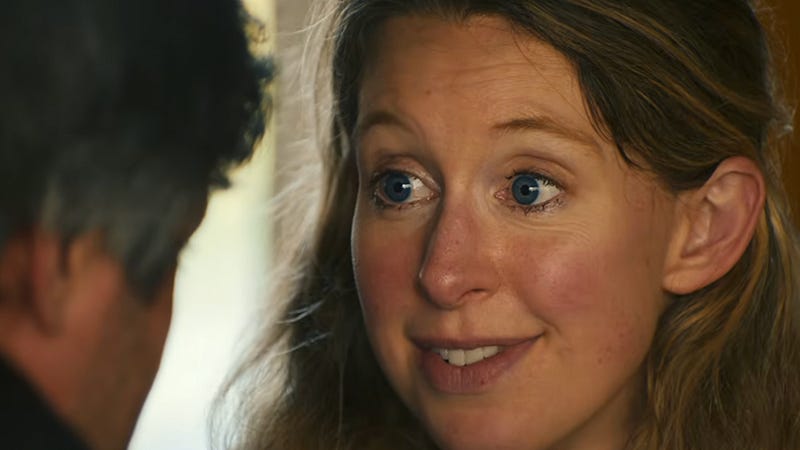
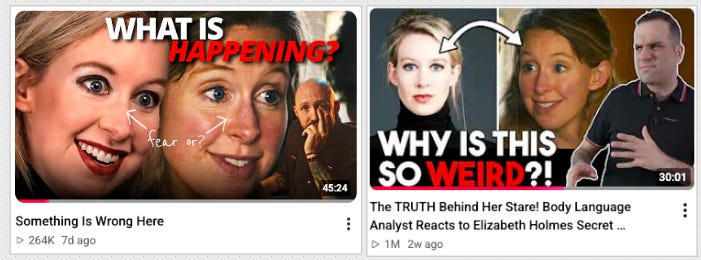
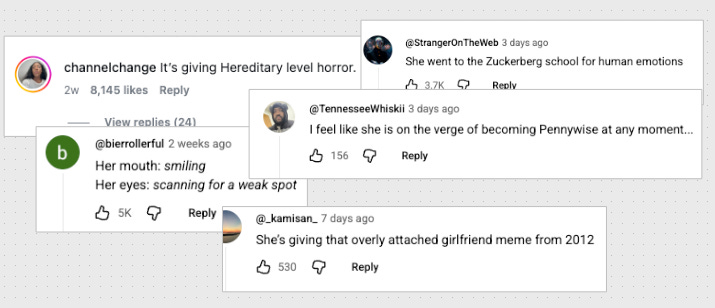
This is Elizabeth Holmes from the trailer of a new A24 documentary. In the comment section across the whole internet, the reaction has been pretty much unanimous: people say her stare is creepy and that she looks fake, and a lot of them are sure only a psychopath could look at a camera that way. Some body language experts on YouTube have made hour-long videos breaking down a trailer that’s barely two minutes long.
If you missed the story the first time: Holmes dropped out of Stanford at 19 to build a device that could supposedly run hundreds of tests from a drop of blood. Theranos hit a $9 billion valuation and she became one of the most celebrated founders in Silicon Valley. Then in 2015 a Wall Street Journal reporter named John Carreyrou exposed that their tech didn’t work. Theranos shut down in 2018, and in 2022 Holmes was convicted of fraud and sentenced to just over 11 years in prison.
Coincidentally enough, a few days before the first trailer came out I happened to finish Bad Blood, Carreyrou’s book about the whole story. So I’ve been reading these comments with the book fresh in my head. What’s funny to me is how people perceive the same thing completely differently.
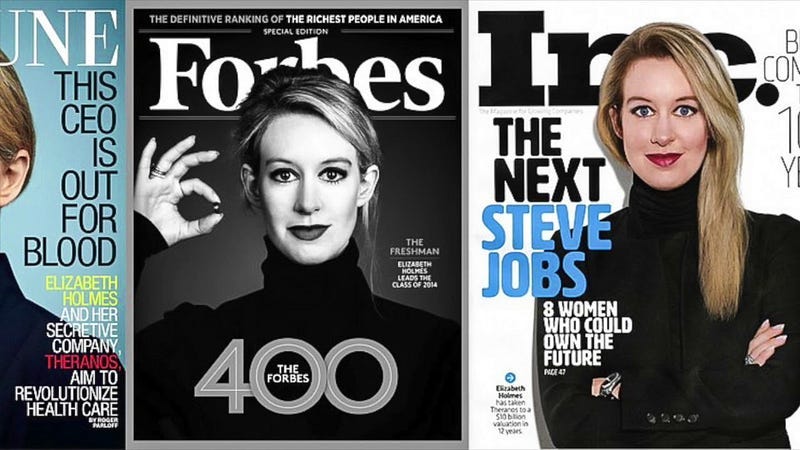
Holmes was a huge Steve Jobs fangirl. She wore a black turtleneck almost every day like he did and spoke in a very deep voice that some former employees said wasn’t her natural one. And she already had the same eye contact (according to the book). In 2014 none of this bothered anyone: magazines called her “the next Steve Jobs,” and the deep voice and intense eye contact read as signs of a serious founder. Today the same details are being used as proof she’s a psychopath: the turtleneck was a costume and the voice means she was faking it from day one.
But the people who believed her back then weren’t naive. One of them was George Shultz, former U.S. Secretary of State under Ronald Reagan and sat on the Theranos board. His grandson Tyler got a job at Theranos, saw that the tests weren’t working and went to his grandfather to warn him. George sided with Holmes over his own grandson till the end. I don’t think he missed something obvious in her eyes back then and nothing else about her made him doubt it.
While reading the book I was conscious that Carreyrou had full control over my perception of Elizabeth Holmes, as Holmes refused to talk to him, so every scene is someone else’s account of her. He decided which details went in and how they were framed. She’s the one-dimensional bad guy from the first page to the last, and I noticed that the Elizabeth Holmes in my head is partly his version of her. I’ve always believed people are more complicated than that, but as a reader you can’t tell where the facts end and his story begins.
This is where I think it becomes bigger than Holmes. Unproven conviction gets called vision when the ending is good, and psychopathy when it isn’t.
When Elon Musk first said a private company could launch rockets into space, something only governments had done, it was basically a dream with no evidence behind it. Most people who believed him didn’t check the engineering or actual technical detail. They believed his reputation as someone who figures things out from first principles, and it worked similarly with Holmes too, before everything fell apart. The difference is that Musk is an engineer who could actually deliver what he promised, and while he was figuring it out a failed rocket didn’t give anyone a wrong blood test result. Theranos on the other hand, was running tests on real patients the whole time.
Most founders and business owners run into a small version of this. The common advice these days is to distribute before you build: put up a landing page and sell a waitlist before the product exists. A lot of people never try it because of one thought: “what if I can’t deliver?” Funny enough, if it works you’re resourceful, and if it doesn’t you’re a fraud.
I’m still really looking forward to this documentary even though I know how the story ends. I don’t care much about watching her get punished. What I am interested in is something the book never gave me, which is Holmes herself: what’s behind the facade, and the nonverbal cues between the things she says. I know that’s pretty close to what the body language experts are doing. I guess the difference is that they’ve already decided what they’re going to find.