AI has made it incredibly easy to create content. The barrier to producing a blog post, LinkedIn post or a thought leadership piece is basically zero now. And you can see the result of that every time you open your feed: the same recycled structures, the punchy-sentence-line-break formulas, the same surface-level takes that sound confident but say nothing new.
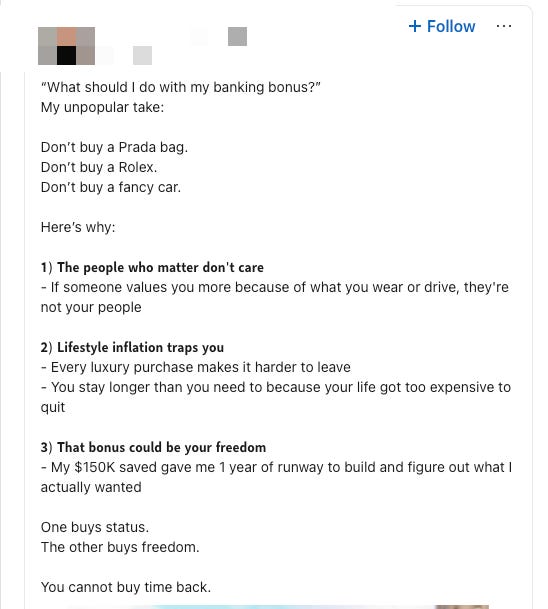
The volume is going up but the stuff that actually makes someone stop scrolling and think “I wanna look into this product” is getting rarer, and that’s the gap. For anyone building a brand or trying to drive real business outcomes through content, whether that’s getting someone to book a demo or just building enough trust so people remember your name when the buying decision comes, that gap is where the opportunity is.
This post is a full walkthrough of a content exercise I did for DualEntry, a Series A fintech startup that’s raised $90M to build an AI-native ERP for modern finance teams. Their buyers are CFOs, controllers and heads of finance at scaling companies.
I’m going to walk through how I approached it from start to finish: the strategic thinking, editorial decisions and the specific judgment calls I made throughout the production process as well as the final output.
The goal was to produce a short-form thought leadership piece that could live on LinkedIn and actually get a finance leader to stop scrolling, read through, then associate DualEntry with a problem they care about.
The Strategic Audit
Before creating anything, I wanted to understand what DualEntry was already doing with their content and where the gaps were.
Their blog is technically solid: Long-form 3,000+ words educational pieces, covering topics like functional currency accounting, general ledger examples and AI accounting software comparisons. Deep, well-researched, clearly built for SEO. If someone is actively searching “how does multi-entity consolidation work,” they’ll find DualEntry and get a thorough answer.

The issue is that the vast majority of their content reads like this. They are educational and reference-heavy, which do serve a specific purpose. But this is not the kind of content that generates engagement or spread, because it’s against the nature of“virality”.
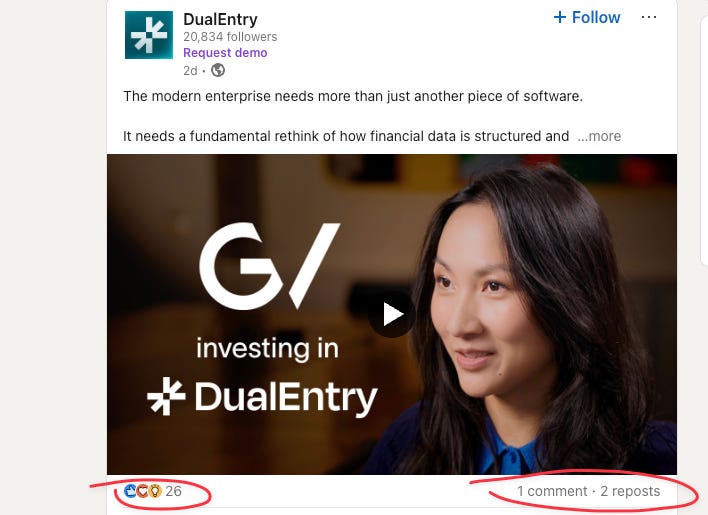
Nobody is gonna forward a 3,000-word accounting explainer to a colleague or even his CFO saying “you have to read this.” And when you look at their LinkedIn (20,000+ followers), the engagement tells the story: most posts pull between 12 and 34 reactions, which is well under 0.2% engagement on their follower base. The posts are mostly company updates, newsletter links, and blog traffic drivers. Very little of it is built for LinkedIn as a platform.
What this tells me is that DualEntry has depth content covered but is missing a whole layer of top-of-funnel content that’s native to where their audience actually lives. Finance leaders are on LinkedIn, and they scroll through their feed between meetings — They’re not clicking through to read 3,000-word technical articles from a company page during a Tuesday afternoon. They engage with content that meets them in the feed, with a clear perspective, in a format that respects their time.
That gap is also a signal that the team hasn’t been aggressively experimenting with different content styles and formats. When all your content looks the same, it usually means there’s an opportunity to test what the audience actually responds to. A proper content mix would combine the existing SEO-focused depth content with shorter, more engaging pieces that serve a completely different purpose: building brand awareness and trust before the buyer is even in evaluation mode.
That’s where I focused.
Choosing the Angle
The brief offered four topic options:
What AI-native ERPs mean for modern finance teams
How growing companies should think about multi-entity accounting
Why self-storage operators are rethinking their finance stack
How DualEntry compares to legacy ERP platforms
Topics 2, 3 and 4 are all valid content plays for DualEntry, but they each require either deep product knowledge, niche technical context, or a narrow audience segment. These are the kinds of articles that ideally involve someone closer to the product or a subject matter expert, maybe even a CFO guest contributor. They’re important for DualEntry’s content library, but they weren’t the right fit for what I was going after: something engaging, with a clear point of view, that connects with the broadest possible slice of their finance audience
But “what AI-native ERPs mean for modern finance teams” on its own is just a title. If I wrote to that directly, I’d end up with a generic overview that touches on everything and sticks with nobody. The kind of piece that gets produced in five minutes and forgotten in ten.
I needed a specific angle, something concrete enough that a finance leader recognizes their own reality within the first few sentences. I landed on the month-end close: how it’s compressing from a multi-week event into something much shorter as AI-native systems handle reconciliation, categorization, and consolidation continuously instead of batching it all into a close period.
I chose this because I’ve sat through it. I spent time in corporate finance at both a major bank and an asset management firm, going through monthly and quarterly reporting cycles where data came in from multiple teams on different timelines, where one late revision could cascade through a chain of spreadsheets and cost hours of rework. That’s a universal experience for anyone who’s been on a finance team, regardless of company size or industry. Starting there meant I could write from real experience, and any controller reading it would feel like the author understands their world.
One more decision I had to make: how far forward to project the vision. I could have gone bold and said “the monthly close is going to disappear entirely.” That sounds great as a headline, but it also sounds like hype to a skeptical finance leader, and this audience has heard vendors promise transformation before. I kept it grounded: the close is compressing from weeks to days, and teams on AI-native systems are already seeing this shift. Ambitious enough to be interesting, realistic enough to be credible, and close enough to what DualEntry’s product actually enables that the connection feels natural.
The Production Process
I use AI for most of my content production, and I think it’s worth being transparent about that because the workflow itself is actually where the interesting stuff happens
I use AI as a core part of my production workflow, and I want to be transparent about that because the building a repeatable, measurable and quality-controlled content system using AI is exactly what a company needs, especially a startup.
The interesting part is the editorial process I ran on top of it, because that’s where the actual quality control happens, and that’s what determines whether the output reads like human or something with strong “AI accent”.
The way I think about it: AI is good at producing raw material quickly, but it has a bad sense of whether that material is right for a specific audience, whether it sounds authentic, or whether a reader would actually finish it. That judgment layer is the human part, and most people skip it because the first draft already “looks good.” Looking good and being good are very different things.
I went through several rounds of revision on this piece, and each round was driven by something specific I noticed.
The “AI accent” problem
The first draft came back with language patterns that I’ve learned to spot pretty quickly — things that make a content feel generated rather than written:
The most common one: the rhetorical inversion, where it sets up a contrast using the “it’s not X, it’s Y” structure:
“This isn’t a people problem. It’s a systems problem.”
“This isn’t just inefficient. It’s a misallocation of talent.”
“The question isn’t ‘does our ERP have AI features?’ It’s more fundamental.”
It feels like a formula when it’s everywhere, which readers might not consciously identify but they’ll feel something is off. It’s the same feeling you get reading those LinkedIn posts where every line is a short declarative sentence with a line break after it. There’s a rhythm that’s too predictable, and predictable writing doesn’t hold attention.
The other patterns I caught: heavy em-dash usage as rhetorical punctuation (one per paragraph is fine, one per sentence is a tell), and a choppy rhythm where nearly every sentence was short and declarative. Real writing has variation. Some sentences are long and connective, some are short for emphasis, and the pattern isn’t predictable.
I flagged all of these and pushed for natural sentence structure. Making it “sound less like AI” was just a means to an end: my goal was to make it read like it came from a person who thinks in full paragraphs, not someone assembling fragments.
The depth problem
After cleaning up the language it was more about the content itself. The piece was mostly generic problem statement. It described the pain of the month-end close in detail, which is good, but then it waved its hands at the solution: “AI-native ERPs handle things continuously, which makes the close faster.” A CFO reading that would think “okay, you’ve described my life back to me. So what? What specifically changes? How?”
I pushed for concrete specificity on the “what changes” section. The revised version walks through the actual mechanics: transactions categorized as they come in, bank feeds reconciling against the ledger automatically, multi-entity consolidation updating in real time, exception rates dropping as the system learns patterns. By the time the close period arrives, the mechanical work is largely done and the team focuses on the judgment calls that actually require a human.
This specificity does two things. It makes the piece more credible because a reader can evaluate whether these claims are plausible based on their own experience. And it creates a natural bridge to DualEntry’s product without turning the piece into a sales pitch. (I tend to avoid direct sales pitches or hard CTAs in thought leadership because they undercut the trust you’re trying to build. If the piece does its job, the reader will find their way to the product with a soft CTA)
The structure/format problem
The draft was solid on substance at this point, but it still felt like reading an essay. Four section headers, each announcing the next idea. Heavy scaffolding. That’s how blog posts are typically structured, and it works for a 2,000-word SEO piece, but I was writing something designed for LinkedIn: 400–600 words, meant to be consumed in 2–3 minutes during a scroll.
On LinkedIn, someone reads the first two lines and decides whether to keep going. Section headers create psychological distance. They signal “this is a structured document, sit down and study it” instead of “someone is thinking out loud about something you care about.” I stripped all the headers except the title and let the piece flow as one continuous thought. The ideas progress in the same order, but the transitions are woven into the prose instead of announced.
The production-readiness layer
Before finalizing, I added author’s notes flagging what this piece would need to move from thought leadership into a full conversion asset: customer data (close time reduction metrics, automation percentages), third-party benchmarks from sources like CFO Dive or APQC, and real customer quotes describing the before and after. I included these because when I’m thinking about a piece of content, I’m always thinking about where it sits in the bigger picture of a company’s content strategy, and what the next version looks like. A thought leadership article earns attention. The data and proof points are what turn that attention into a demo booking.
The Final Output
Here’s the final piece in full:
The Month-End Close Is Getting Shorter. Here’s What’s Driving It.
If you run a finance team at a growing company, you know the rhythm. Last week of the month, the team goes heads-down. Data comes in from multiple systems on different timelines. Someone sends a “final” number that gets revised two days later. One revision cascades through a chain of spreadsheets. Three hours of rework. The close absorbs the entire team for weeks, and by the time it’s done, you’re already behind on the work that was supposed to happen this month.
This has been the default for decades. But something is starting to shift.
A new generation of ERP platforms, built around AI from the ground up, is compressing the close in a way legacy systems never could. The core difference is simple: the work that finance teams currently batch into the close period, these systems handle continuously throughout the month.
Transactions get categorized as they come in. Bank feeds reconcile against the ledger automatically. Multi-entity consolidation updates in real time. The system learns your patterns, so exception rates drop the longer you use it. By the time the close period arrives, the mechanical work is largely done. The team reviews what the system has prepared and focuses on the judgment calls that require a human: unusual transactions, variance analysis, strategic reclassifications.
This matters most for companies in a growth phase where complexity is increasing. More entities, more currencies, intercompany eliminations, new compliance layers. In a manual environment, that complexity means more headcount, more coordination, and more error-prone workarounds. Teams adopting AI-native infrastructure are finding the opposite: their close timelines compress even as their business gets more complex, because the system absorbs that complexity in a way that manual processes can’t.
We’re still early in this shift. The monthly close won’t disappear overnight, and finance teams will always need to apply judgment and oversight. But the direction is clear. The close is moving from a multi-week event that halts all other work toward something closer to a continuous process where the final period is short, focused, and largely confirmatory.
The finance teams that get there first will have a compounding operational advantage, because every month they reclaim is a month their people spend on work that actually moves the business forward.
DualEntry is an AI-native ERP built to make this shift possible, with continuous reconciliation, automated categorization, and real-time multi-entity consolidation for scaling finance teams.
Notes:
A few considerations I’d flag if this were going into production:
1. Topic: What AI-native ERPs mean for modern finance teams
2. Data support. This draft leans on narrative and directional argument. In a published version, I’d want to anchor key claims with data — ideally from DualEntry’s own customer base (e.g., average close time reduction after implementation, % of manual reconciliation automated). Third-party benchmarks on close timelines and automation impact (from sources like CFO Dive, Ventana Research, or APQC) would also strengthen credibility with a skeptical finance audience.
3. Customer voice. The strongest version of this piece would include a real quote or reference from a DualEntry customer describing the before/after of their close process. Per the case study guidelines I avoided inventing any, but in practice this is the kind of social proof that converts a reader from “interesting” to “I should look into this.”
4. Format and distribution. I wrote this as a LinkedIn-native thought leadership piece given the word count. It’s designed to work as a standalone post that stops the scroll for finance leaders, with a soft CTA that drives to the demo page. On LinkedIn specifically, I’d test this with and without the subheadings stripped (as written here vs. with 2–3 headers for scannability) to see which format drives more engagement with the ICP. It could also be adapted into a longer blog post with added depth on the technical mechanics for SEO purposes.
How This Scales
The walkthrough above covers a single piece of content, but the system behind it is designed to repeat. Here’s how I think about turning this into a consistent operation:
Strategic audit happens once upfront and gets updated as you learn. Understand the company’s brand voice, content landscape, the competitive space, and the audience’s actual behavior. This informs weeks of content direction.
AI-assisted production with editorial oversight is the daily workflow. AI generates raw material. I run the editorial layer: checking for generated language patterns, calibrating tone for the audience, making sure the substance is specific enough to be credible. Each piece goes through at least two revision cycles before it ships.
Format diversification is where a lot of teams leave value on the table. Writing is the lowest-barrier way to create content, but a single well-written piece can be repurposed across formats: a LinkedIn post becomes a short-form video script, a blog article gets pulled into a carousel, key insights become threads or X posts. The strategic thinking and research that goes into one piece can fuel a week of content across platforms.
Tracking and iteration closes the loop. Which topics are driving engagement from the right audience? Which formats convert? What’s the lag between content engagement and pipeline activity? That data is what turns a content calendar from creative guesswork into a measurable growth function.
Taste is the whole editorial process I walked through above: catching AI patterns, pushing for specificity, calibrating tone for a skeptical audience, knowing when something reads like a template versus when it reads like a person. It’s hard to define in the abstract, but when you see content that has it versus content that doesn’t, the difference is immediate. And it’s the one thing in this workflow that can’t be automated or systematized. Everything else scales. Taste is what you bring to the table or you don’t.
I’ve been running a version of this system across my own content operation for the past two years. Different context (B2C, career services, audience of Chinese professionals in North America), but the fundamentals transfer directly to B2B because at the end of the day you’re trying to influence a real person’s perception, trust, and behavior. I grew from zero to 60K+ subscribers across multiple platforms, entirely organic, producing written and video content.
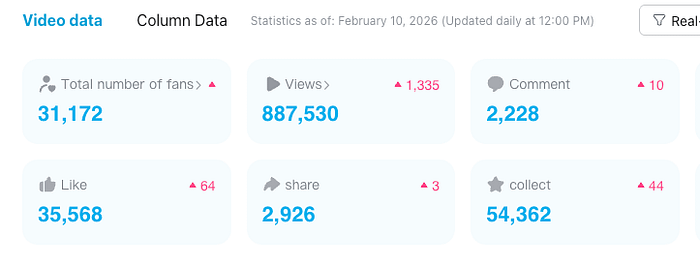
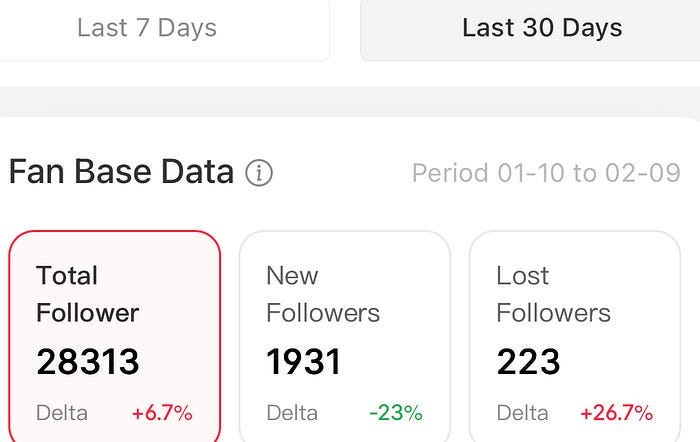
That B2C muscle means I can do the strategic thinking and also ship at pace, which is the combination early-stage companies actually need: someone who gets the big picture but also produces output every week.
The content landscape is only going to get noisier as AI keeps lowering the production barrier. That’s actually an advantage for anyone who brings the things AI can’t automate: strategic thinking, editorial judgment, domain knowledge, and taste. The ability to look at a piece of content and know, quickly and specifically, whether it’s going to earn the reader’s time or waste it. That’s the layer I operate in.
If any of this resonates, feel free to reach out.
LinkedIn | Email | Writing samples
Thanks for reading Carl’s Substack! Subscribe for free to receive new posts and support my work.