I spent the last weeks studying how some of the fastest-growing B2B SaaS companies run content:
Ramp, Gong, Clay and Rippling.
These are companies doing hundreds of millions in ARR with recent reports pointing to roughly 20–30%+ annual growth for some. So I went in expecting to find a “shared playbook”, i.e. some templates or formulas that scale across the board. But what I found was the opposite, that these companies produce wildly different content, and the more I looked at it the more I realized that’s the whole point.
A quick illustration:
Ramp has a named economist publishing monthly data indexes with interactive charts that journalists embed in articles:

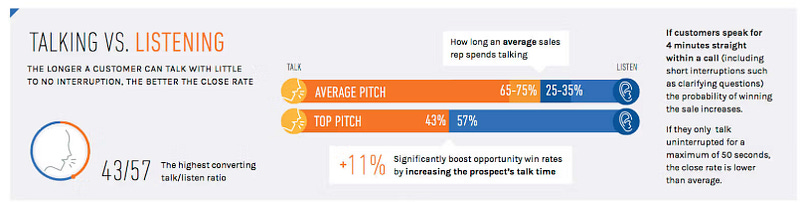
Gong runs what’s basically a research lab analyzing millions of recorded sales calls:
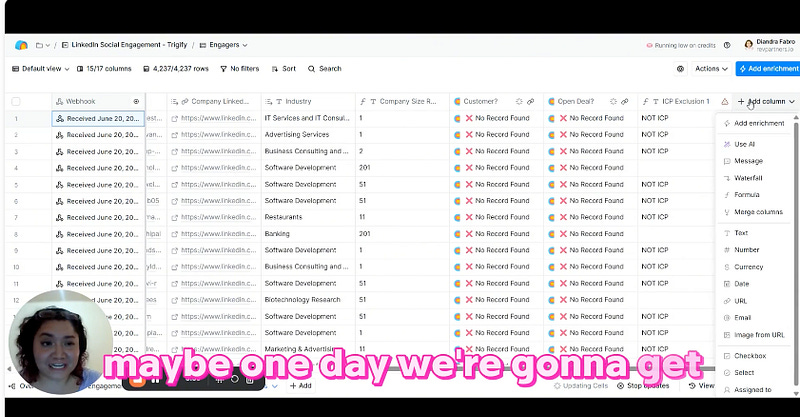
Clay’s most effective content is step-by-step workflow tutorials that double as product onboarding.
And Rippling puts out compliance calendars and 40-page HR leadership playbooks.

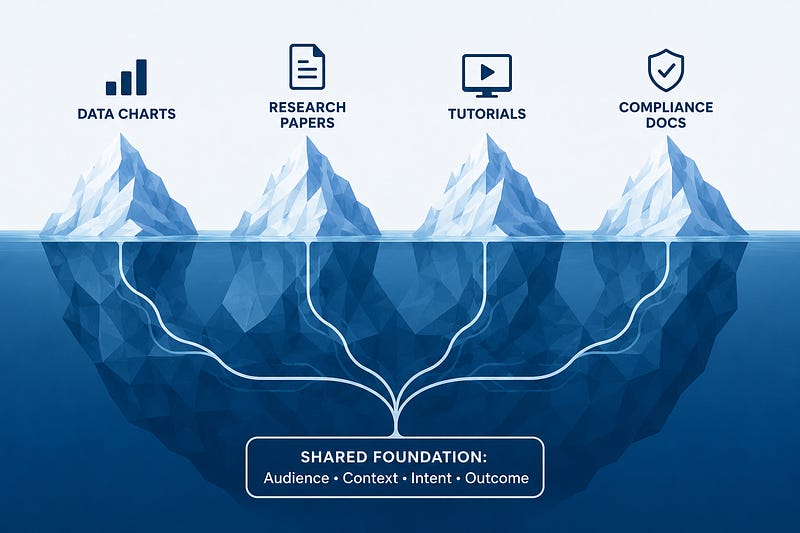
Now if you just look at the output, it doesn’t even seem like these 4 companies are playing the same game. But once I started looking beyond the surface level “what they made”, a pattern started showing up, which has very little to do with content itself.
The wrong starting point
Most conversations about B2B content strategy starts with some version of “what content should we create?” Blog or podcast? Thought leadership or SEO plays? Newsletter or LinkedIn?
These are all reasonable questions but are downstream. It’s basically guesswork if you start here because companies of similar size, similar growth and B2B models would always converge on similar answers. Instead, the good ones start with something different:
what is our hardest go-to-market bottleneck right now, and how can we use content to directly address it?
When you look at Ramp, Gong, Clay, and Rippling through that lens, every choice starts making sense.
1. Where you sit in your market changes everything
The first thing that clicked was category maturity (similar to the awareness model in marketing), meaning where a company sits in the lifecycle of its market:
Are you creating a new category that people don’t know exists yet, competing for attention in a crowded one, or trying to replace a fragmented status quo that’s deeply entrenched?
Gong is the clearest example of the first one. When they started “revenue intelligence” wasn’t a thing. Nobody was searching for it or comparing vendors in the space because the space didn’t exist. Therefore Gong’s content had a very specific job: to prove that the category deserves to exist in the first place and that’s why Gong Labs works. When you analyze millions of actual sales calls and publish findings like “reps who mention pricing at this specific point in the call close at a measurably higher rate,” you’re producing evidence that a data layer on top of sales conversations reveals things humans can’t see on their own. The argument for the entire category is baked into the content.

Ramp had the opposite problem. Nobody needs to be convinced that expense management is a real thing, because there are already dozens of players in that space making more or less the same promise (“we’ll save you money, we’ll automate your expense reports”). So Ramp’s content job was differentiation inside a noisy market, which is why they built an Economics Lab with a named economist, Ara Kharazian, publishing a monthly AI Index tracking corporate AI spend based on real transaction data from tens of thousands of businesses. Media outlets cite Ramp’s numbers because nobody else has this dataset. The whole thing works as a differentiation engine and content just happens to be the vehicle.

If Ramp does what Gong does: publishing research-lab-style studies to prove that their category matters, it would fall flat because nobody’s questioning whether expense management matters. Likewise for Gong, running a big brand-authority data play to stand out in a crowd would also miss, because there’s no crowd to stand out in.
2. There’s more to category position alone
However, category maturity isn’t the only thing driving content decisions, otherwise you’d expect a lot of companies to produce similar content, but they don’t.
Ramp and Rippling both operate in established, competitive categories where they need to differentiate, but their content looks nothing alike:
Rippling doesn’t build economics labs or publish interactive data indexes. Instead they produce detailed compliance calendars, regulatory guides, and operational playbooks. Their resource library reads like a reference shelf for HR directors who lose sleep over missing a payroll deadline or failing a compliance audit.

The difference comes down to their buyers’ fear and drive.
Finance teams evaluating Ramp are performance-driven — They need sophistication and proof that a vendor understands the strategic landscape. And getting excited about a well-built data index tracking AI adoption trends is pretty on-brand for a CFO evaluating spend management tools.
Meanwhile, HR and IT leaders evaluating Rippling are more anxiety-driven, because they don’t get promoted for picking a brilliant vendor. However, an executive might get fired for compliance failures and data breaches caused by fragmented systems. So Rippling’s content directly addresses that fear. “Here are the exact compliance dates you need to hit this year. Here’s a checklist. Here’s what happens when your systems are fragmented and things slip through the cracks.” The content earns trust by reducing perceived risk, which is a completely different emotional job than what Ramp’s content is doing, even though both companies face similar competitive dynamics on the surface.
I think this is the part most people miss when trying to “copy” how other companies run content. Two companies can be in nearly the same competitive position and still need radically different messaging because their buyers make decisions based on different emotions. Copying someone else’s tactics without understanding the underlying emotional logic wouldn’t lead to anything.
3. How many people need to say yes before a deal closes?
When a sales leader decides to try Gong, that’s largely one person (or a small team) making the call. But think of a Rippling deal signing process: HR needs to sign off, IT needs to weigh in, finance probably has a say, and legal might get involved too. It’s a consensus purchase where multiple stakeholders evaluate the decision, and many of them will never speak to a sales rep.
This changes what content needs to do in a way that’s easy to overlook.
Rippling’s guides and compliance calendars aren’t just marketing materials in the traditional sense but more so functioning as internal sales collateral. A champion inside a prospect company can forward a Rippling compliance guide to their CFO or IT director to build the business case. The content is literally designed to travel through organizations and does persuasion work on people the marketing team can’t directly reach.

That’s why Rippling leans so heavily on frameworks, checklists, and structured guides rather than hot takes or data visualizations that’s only optimized for social media distribution. A LinkedIn thought leadership post doesn’t survive being forwarded to a skeptical CFO during a procurement review but a comprehensive compliance calendar does.
Clay sits at the other end of this — They sell to growth and sales teams making faster, smaller-group decisions. Their content can afford to be specific, tactical, and workflow-focused because it only needs to land with the people actually building the sequences.
4. how close does content need to sit to the product itself?
Clay is the extreme case. Their best content shows you exactly how to combine funding alerts with tech stack filters and content engagement triggers to build automated outbound sequences. If you consume a Clay tutorial, you’ve essentially completed a chunk of product onboarding without realizing it. Content and product education collapse into the same thing, which makes sense because Clay sits at an infrastructure layer where the product logic is the value proposition. You genuinely cannot explain why Clay is useful without showing a workflow in action. Abstract thought leadership about “the future of data-driven outbound” would ring completely hollow.
Ramp is the opposite end of this spectrum. Since everyone understands what a corporate expense card does, Ramp doesn’t need content to explain the product itself, which frees them up to play an entirely different game: using content to build authority and brand association at a level far above the product. Their AI Index positions them as a company that understands the macro landscape of business technology adoption. The product is almost invisible in the content because the product is self-explanatory.
So where does this leave you?
If I had to turn all of this into a diagnostic you could actually use, it would go roughly like this:
Start with where you sit on category maturity, because that’s the biggest fork: are you creating, crowding, or replacing?
Then check your buyer’s primary emotion, whether they’re driven by ambition and performance gains or by fear and risk avoidance, because that sets the entire emotional frame of your content.
Then look at how many people need to say yes, since that determines whether your content can speak to a single persona or needs to work as internal collateral that survives being forwarded. And finally, ask how tightly content needs to sit next to the product, because that decides whether you’re building workflow tutorials or playing a brand-authority game.
These dimensions interact with each other, and that’s the reason you can’t just look at what one successful company does and copy it. Rippling’s entire content approach (deep, educational, compliance-focused, built for consensus buying) works because all four of their dimensions point in the same direction. But if you had a different combination of positions on these dimensions, you’d need something that doesn’t look like any of these four companies.
Therefore the framework really depends own your own coordinates and let them dictate the content strategy, rather than “picking a company like me and replicate”
I started this research looking for playbooks to borrow and ended up with something I think is more useful, which is basically just a better set of questions to ask before you build anything.
If you found this interesting or want to push back on any of it, I’d genuinely love to hear from you.
References
Ramp’s Data Marketing Teardown: How They Turned ‘Corporate …
Ramp Raises $300M: B2B Marketing Case Study
How Gong makes $244m with “boring” content
Gong — Content Marketing Case Study — Wisp CMS
Ramp AI Index April 2026 update
What drives AI adoption? — by Ara Kharazian — Ramp Economics Lab
Everyone Knows Gong Crushed Content. Here’s How They Did It.
How Gong Labs Went Viral | Grow & Tell — Dock.us
6 ways marketers can use Clay to enrich data and build campaigns
Clay Outbound: How It Works and Why It’s Changing Prospecting
B2B Data Enrichment with Clay: Build Workflows That Scale
Clay Prospecting: The Complete Beginner’s Guide to Automated …
The 2026 Guide to Strategic Leadership | Rippling+
Rippling+ Resource Library — Learn from the best in HR, IT and …
Rippling Blog — News & Best Practices for HR, IT & Finance
How Gong built a $7,2bn dollar brand? (Secrets from their CMO)
How Ramp’s viral stunt broke B2B SaaS marketing norms — LinkedIn
Rippling Customer Webinars | Learn how to get the most out of …